

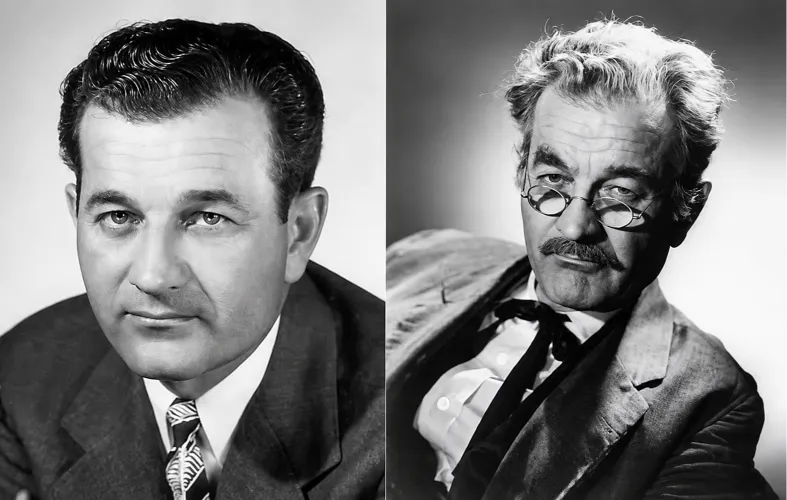
Milburn Stone spent twenty years playing the same character on the same show. That role made him a household name for an entire generation of television viewers. Younger audiences searching his name today often only know him as Doc Adams from Gunsmoke, without the fuller story behind the actor. This guide covers his verified life, career, and legacy, built from primary biographical sources rather than guesswork.
Who Was Milburn Stone? Quick Facts
| Full Name | Hugh Milburn Stone |
|---|---|
| Born | July 5, 1904, Burrton, Kansas |
| Died | June 12, 1980, La Jolla, California, aged 75 |
| Profession | Actor |
| Known For | Doc Adams on Gunsmoke, 1955 to 1975 |
| Years Active | 1919 to 1979 |
| Awards | Primetime Emmy Award, Outstanding Supporting Actor in a Drama, 1968 |
| Spouses | Ellen Morrison (married 1925, died 1937); Jane Garrison (married 1939, divorced 1940); remarried Jane Garrison in 1946, together until his death |
| Children | One daughter, Shirley, from his first marriage |
Early Life in Kansas
Milburn Stone was born Hugh Milburn Stone on July 5, 1904, in Burrton, a small town in Harvey County, Kansas. His father, Herbert Stone, worked as a shopkeeper. His mother was Laura Belfield. He attended Burrton High School, where he was active in the drama club, played basketball and sang in a barbershop quartet, an early sign of the performing instincts that would define his career.
Stone had a notable option available to him that he chose not to pursue. He reportedly received a congressional appointment to the United States Naval Academy, a genuinely prestigious opportunity. He turned it down in favor of joining a stock theater company led by Helen Ross. That choice set the direction for the rest of his life.
Family Background and Early Influences
Acting ran in Stone’s extended family. He was the nephew of Fred Stone, a well-known Broadway comedian. He was also a cousin of character actress Madge Blake, who later appeared on the 1960s Batman television series as Aunt Harriet Cooper. Growing up with those connections likely normalized a performing career in a way that would have been unusual for most families in rural Kansas at the time.
His brother, Joe Stone, also worked in the entertainment industry as a writer, eventually authoring scripts for three episodes of Gunsmoke decades later, a detail that shows the family’s creative ties extended well beyond Milburn’s own performing career.
From Vaudeville to Broadway
Stone debuted on stage in a Kansas tent show in 1919, while still a teenager. He moved into vaudeville in the late 1920s. By 1930 he had formed a song-and-dance act called Stone and Strain, performing in the touring circuit style common to entertainers of that era before film and television dominated the industry.
His Broadway credits include Jayhawker in 1934 and Around the Corner in 1936, modest roles that nonetheless gave him New York stage experience before he made the move west. In 1935, Stone relocated to Los Angeles to pursue a screen career, a common path for stage performers as Hollywood’s studio system expanded through the 1930s.
That transition from stage to screen was not immediate stardom. Stone spent his first years in Hollywood taking small, often uncredited parts while building relationships with casting directors and producers, the standard path for character actors trying to establish steady work rather than chase a single breakout role.
Building a Character Actor Career in Hollywood
Stone spent roughly two decades as a working character actor before Gunsmoke made him a star, appearing in dozens of films across genres. Universal Pictures signed him in 1943. He appeared in the studio’s genre pictures including Captive Wild Woman and Jungle Woman that same decade.
His filmography from this period also includes the Tailspin Tommy adventure serial for Monogram Pictures and the Roy Rogers western Colorado in 1940. Later work included John Ford’s The Long Gray Line in 1955. That range, from serials to westerns to prestige studio pictures, reflects the working reality of a dependable character actor rather than a leading man, taking whatever roles kept him steadily employed.
Stone also appeared in Sherlock Holmes Faces Death in 1943 and the war drama Gung Ho! that same year, playing a doctor character years before Doc Adams would define the rest of his career. Looking back, that early pattern of playing physicians and authority figures in supporting roles reads almost like a preview of the part that would eventually make him famous.
Landing the Role of Doc Adams on Gunsmoke
Gunsmoke began as a CBS Radio series in 1952 before being adapted for television in 1955. The television adaptation recast several roles from the radio version, including Doc Adams, originally voiced on radio by Howard McNear, who later became known to television audiences as Floyd the barber on The Andy Griffith Show.
Stone took over the role for television and gave the character a harder edge than McNear’s radio portrayal, a choice that helped define Doc Adams as one of the show’s most memorable figures. Stone remained with Gunsmoke for its entire 20-year television run, missing only seven episodes in 1971 when he required heart surgery. Actor Pat Hingle briefly filled in as a substitute doctor character during that absence.
Doc Adams and Gunsmoke’s Twenty-Year Run
Gunsmoke ran for 20 seasons and 635 episodes total, with Stone appearing in 604 of them, an extraordinary run of consistency for any television actor. Doc Adams became known for presiding over the fictional Dodge City’s births and gunshot wounds alike. He also kept up a running friendly rivalry with two regular co-stars: Dennis Weaver as Chester Goode and Ken Curtis as Festus Haggen.
That level of longevity on a single show is rare even by classic television standards. Stone’s steady presence across two decades helped anchor Gunsmoke through numerous cast changes, since the show’s ensemble shifted considerably over its run while Stone’s character remained a constant fixture.
What Made Doc Adams a Fan Favorite
Colleagues and biographers have consistently pointed to one specific trait behind Stone’s success in the role: his insistence on authenticity. He reportedly pushed for medical procedures and period details on set to feel accurate rather than simplified for television convenience, a level of care that separated Doc Adams from more generic western sidekick characters common on competing shows of the era.
That commitment extended to the character’s emotional register as well. Doc Adams was written and played as gruff on the surface but consistently compassionate underneath, a combination that gave the character depth beyond his function as the town physician. Audiences responded to that complexity. It remains a large part of why the character is still fondly remembered decades after the show ended.
Awards and Recognition
Stone won the Primetime Emmy Award for Outstanding Performance by an Actor in a Supporting Role in a Drama in 1968 for his work on Gunsmoke, a career-capping honor after more than a decade in the role. He also received a star on the Hollywood Walk of Fame at 6801 Hollywood Boulevard, recognizing his contribution to the television industry specifically.
After his death, the National Cowboy and Western Heritage Museum in Oklahoma City posthumously inducted him into its Western Performers Hall of Fame in 1981. President Ronald Reagan, a personal friend of Stone’s, was reportedly involved in arranging for a commissioned painting of the Doc Adams character to be presented at the White House, an unusual honor connecting Stone’s television role directly to a sitting president.
Later Life, Retirement, and Death
Stone retired from acting when Gunsmoke concluded its run in 1975, closing out a screen career that had spanned roughly four decades by that point. He lived for five more years after retirement, passing away on June 12, 1980, in La Jolla, California, at age 75.
He was buried at El Camino Memorial Park in Sorrento Valley, San Diego. His third wife, the former Jane Garrison, survived him and lived until 2002. Stone’s only child, daughter Shirley Stone Gleason, came from his first marriage to Ellen Morrison, who died in 1937.
Milburn Stone’s Lasting Legacy
Stone’s legacy extends beyond his own performing career into a physical landmark still in use today. The Milburn Stone Theatre at Cecil College in North East, Maryland, carries his name, giving the actor a lasting connection to performing arts education decades after his death.
Gunsmoke reruns continue to circulate widely, keeping Doc Adams recognizable to viewers who never watched the show during its original run. For a character actor who spent decades taking supporting roles before his signature part arrived, that continued visibility represents a rare kind of career longevity that few working actors of any era achieve.
Milburn Stone’s Place in Western Television History
Gunsmoke itself holds a distinct place in television history as one of the longest-running scripted primetime series ever produced in the United States. Stone’s tenure on the show, spanning nearly its entire run, makes him one of a small handful of actors who can claim two full decades on the same primetime drama.
That kind of consistency shaped how audiences of the era experienced television differently than viewers do today. Weekly appointment viewing meant Doc Adams entered American living rooms every week for twenty straight years, building a familiarity with the character that streaming-era shows, with their shorter seasons and faster turnover, rarely replicate for a single actor now. For more profiles of the people who shaped classic film and television, see our full biography coverage.
Frequently Asked Questions
Who was Milburn Stone?
He was an American actor best known for playing Doc Adams on the television western Gunsmoke from 1955 to 1975. He was born in 1904 in Burrton, Kansas. He died in 1980 in La Jolla, California.
What role made Milburn Stone famous?
His role as Dr. Galen Adams, known as Doc Adams, on Gunsmoke made him a household name. He played the character for the show’s entire 20-year television run.
Did Milburn Stone win any awards?
Yes. He won the Primetime Emmy Award for Outstanding Supporting Actor in a Drama in 1968 for his work on Gunsmoke. He also received a star on the Hollywood Walk of Fame.
How many episodes of Gunsmoke did Milburn Stone appear in?
He appeared in 604 of the show’s 635 total episodes, missing only seven in 1971 due to heart surgery, during which actor Pat Hingle briefly filled in.
Was Milburn Stone related to any other actors?
Yes. He was the nephew of Broadway comedian Fred Stone and a cousin of character actress Madge Blake, who played Aunt Harriet on the 1960s Batman series.
How did Milburn Stone die?
He died on June 12, 1980, in La Jolla, California, at age 75, five years after retiring from acting when Gunsmoke ended its run.
Final Thoughts
Milburn Stone built a full career across vaudeville, Broadway and Hollywood decades before Doc Adams made him widely recognizable. That twenty-year run on Gunsmoke, backed by an Emmy win and a Hollywood Walk of Fame star, cemented a legacy that has outlasted the actor himself by more than four decades. For a performer who spent years as a dependable supporting player before his defining role arrived, that lasting recognition reflects genuine consistency rather than a single lucky break.
Editor’s note: This article was researched using verified public reporting from outlets including IMDb, Wikipedia, the Hollywood Walk of Fame archive and the Rancho Santa Fe Historical Society. It is current as of August 2026.