


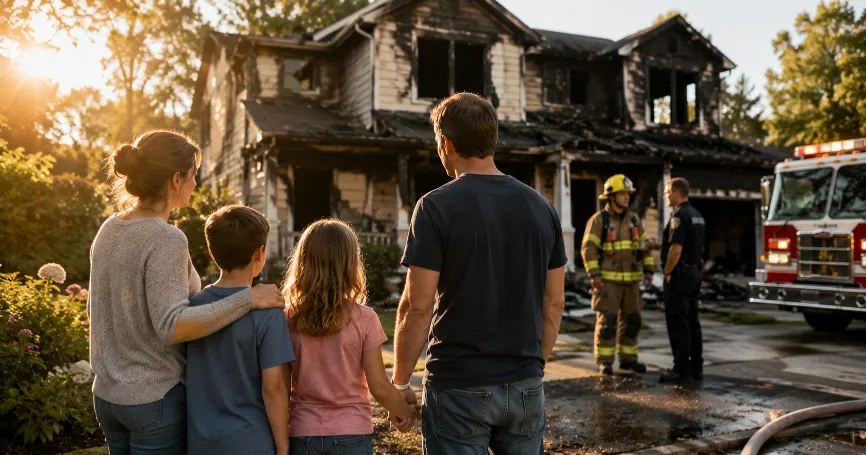
Your house just caught fire, and now you’re standing outside wondering what happens next. The bills don’t stop, the insurance paperwork feels like a foreign language, and if you don’t have coverage, the fear gets even heavier. Knowing what to do after a house fire can feel impossible when your mind is racing. This guide walks you through exactly what to do after a house fire, step by step, so you can move from panic to a real plan.
First Things First — Immediate Safety Steps After a House Fire
Before anything else, safety comes first. Everything else on this list can wait a few minutes. This part can’t.
Confirm Everyone Is Safe and Call 911
Do a headcount of family members and pets. If anyone is hurt, get medical help right away, even for minor burns or smoke inhalation. Call 911 if you haven’t already, and let the fire department finish their work.
Wait for Official Clearance Before Re-Entering
I know the pull to run back inside and grab something is strong. Don’t. Fire officials need to confirm the structure is safe before anyone goes back in, and hidden dangers like weakened floors or gas leaks aren’t always visible.
Turn Off Utilities (Gas, Water, Electricity)
Once you’re cleared to approach the property, shutting off gas, water, and electricity helps prevent further damage. If you’re not sure how, ask the fire department or a utility worker to help.
What to Do After a House Fire — Checklist for the First 24 Hours
If you’re trying to figure out what to do after a house fire in the first 24 hours, keep it simple and follow this order:
- Confirm everyone’s safety and get medical care if needed
- Wait for official clearance to re-enter
- Contact your insurance company to start the claim
- Call your local Red Cross or Salvation Army chapter for emergency shelter
- Take photos of visible damage before touching anything
- Secure the property (boarded windows, locks) to prevent further loss
- Reach out to family or friends for temporary support
Document Everything Before You Clean Up
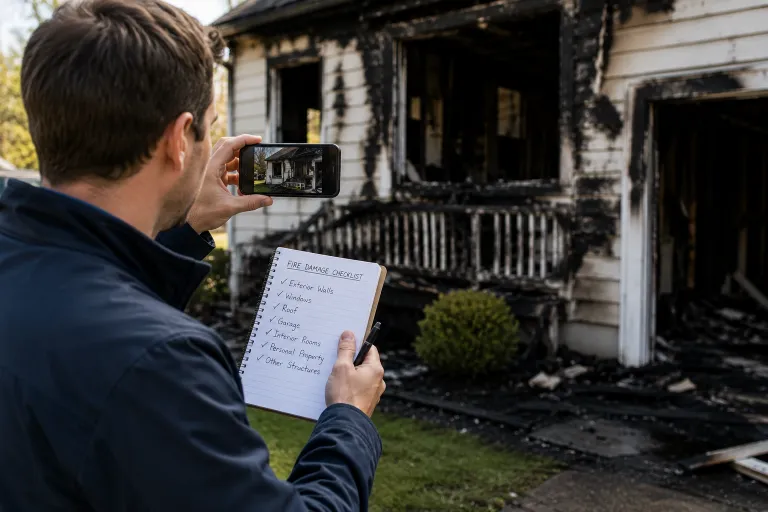
This step gets skipped more than any other, and it’s the one that causes the most regret later. If there’s one part of what to do after a house fire that people underestimate, it’s this.
Take Photos and Videos of All Damage
Walk through every room, if it’s safe, and photograph everything. Wide shots and close-ups both matter, including smoke and soot damage that isn’t always obvious at first glance. This becomes your evidence when you file your insurance claim.
Create a Home Inventory List
List out what was lost or damaged, including approximate purchase dates and values. If you have old receipts, credit card statements, or photos showing the items in your home, pull them together.
Why Cleaning Up Too Early Can Hurt Your Claim
I’ve heard this mistake come up again and again: people rush to clean up out of instinct, and then their insurance adjuster has less to work with. Wait until your claim is documented, and your adjuster gives the go-ahead before you start removing debris.
How to File a Home Insurance Claim After a Fire
This is usually the part that feels most overwhelming, so let’s break it into pieces. Once you understand what to do after a house fire on the insurance side, the rest of the process feels far less intimidating.
Contacting Your Insurance Company
Call your insurer as soon as you can, ideally within 24 to 48 hours. Have your policy number ready, along with a basic summary of the damage.
What an Insurance Adjuster Does
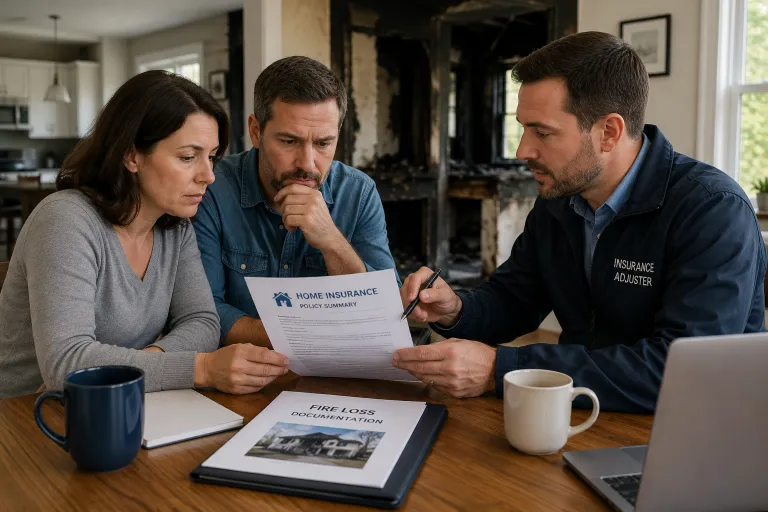
Your insurance company will assign an adjuster to inspect the damage and estimate the payout. They work for the insurance company, not for you, so it helps to have your own documentation ready rather than relying only on theirs.
Realistic Insurance Claim Timeline (How Long It Takes)
Most house fire claims take anywhere from a few weeks to several months, depending on the extent of the damage and how quickly documentation is submitted. Larger losses that require rebuilding estimates tend to take longer. Ask your adjuster directly for an expected timeline so you can plan your finances around it.
Tips for Negotiating a Fair Settlement
Get a second opinion from an independent contractor before accepting a settlement offer, especially for larger losses. Keep every email and phone call logged with dates. If the offer feels low compared to your documented losses, you can push back, and many homeowners do.
Insurance Coverage: What’s Typically Included After a Fire
| Coverage Type | What It Pays For | Example |
|---|---|---|
| Dwelling Coverage | Structural repair or rebuild | Rebuilding the kitchen and roof |
| Personal Property | Belongings lost in the fire | Furniture, electronics, clothing |
| Additional Living Expenses (ALE) | Temporary housing and meals | Hotel stay while home is repaired. |
| Liability Coverage | Injuries to others on your property | A neighbor hurt while helping you. |
Not every policy includes all four, so it’s worth checking your specific coverage limits with your agent. The Insurance Information Institute offers a free breakdown of standard homeowners coverage if you want to compare against your own policy.
Managing Your Finances After a House Fire
Beyond the insurance claim itself, day-to-day money matters need attention too.
Keeping Up With Mortgage and Loan Payments
Even if your home is unlivable, your mortgage payments usually continue. Contact your lender early. Many offer temporary forbearance or hardship programs for homeowners recovering from a disaster. This is one part of what to do after a house fire that people forget in the chaos, and it’s an easy one to miss a payment on.
Replacing Lost Credit and Debit Cards
If your cards, checkbooks, or important financial documents were destroyed, call your bank right away to cancel and reissue them. This also protects you from potential fraud if someone finds your information in the debris.
Can You Claim a Tax Deduction for Fire Losses?
In some cases, yes. The IRS allows a casualty loss deduction for losses connected to a federally declared disaster and sometimes for other qualifying events. Keep your documentation and receipts, and talk to a tax professional about what applies to your situation.
What to Do After a House Fire With No Insurance
If you didn’t have homeowners insurance, the situation is harder, but you still have real options. Figuring out what to do after a house fire with no insurance usually starts with the same question: where can I get help fastest?
Contact FEMA for Disaster Assistance.
If your fire was part of a federally declared disaster, FEMA may offer grants for temporary housing and essential repairs. Apply as soon as possible since funding can be limited.
Reach Out to the Red Cross and Salvation Army.
These organizations often provide emergency shelter, clothing, food, and sometimes small financial grants for fire victims, insured or not. The American Red Cross has a dedicated home fire recovery program you can contact directly.
Bridge Loans and Private Financing Options
Some homeowners turn to short-term bridge loans to cover immediate costs while they figure out a longer-term plan. These typically carry higher interest rates, so treat them as a short-term bridge, not a permanent fix.
Local Charity and Community Resources
Churches, community foundations, and local nonprofits often step in with donations or direct assistance. Your city or county office can usually point you toward resources specific to your area.
Comparison: Recovering From a House Fire With vs. Without Insurance
| Factor | With Insurance | Without Insurance |
|---|---|---|
| Immediate Housing | ALE coverage pays for a temporary stay | Relies on the Red Cross, family, or FEMA |
| Rebuilding Costs | Largely covered up to policy limits | Out of pocket or through loans/grants |
| Timeline | Weeks to months | Often longer, depends on outside aid |
| Financial Stress Level | Lower, though still significant | Higher requires more resourcefulness. |
Finding Temporary Housing After a Fire
Depending on the damage, you may not be able to stay in your home for weeks or months. Friends and family are often the fastest option, especially in the first few nights. If that’s not available, disaster relief agencies and, if you have coverage, your ALE benefit can help cover a hotel or short-term rental.
Ask your insurance company early whether ALE applies and what documentation they need for reimbursement. Keep every receipt from hotels, meals, and temporary essentials, since these often qualify for reimbursement even weeks later.
Rebuilding, Selling, or Relocating — Deciding Your Next Step
Once the dust settles, you’ll face a bigger decision. Rebuilding usually takes six months to a year and keeps you in the same location. Selling the property as-is, sometimes to companies that specialize in fire-damaged homes, gets you cash faster but often at a lower price. Relocating entirely is also worth considering if starting fresh feels like the healthier option for your family.
There’s no single right answer here. Talk it through with your family, your insurance agent, and, if the numbers are close, a financial advisor. Whatever you choose, understanding what to do after a house fire at this stage means thinking beyond the immediate crisis and toward where you want to be in a year.
Common Mistakes People Make After a House Fire
- Cleaning up before documenting the damage
- Accepting the first insurance settlement without a second opinion
- Forgetting to notify the mortgage lender
- Throwing away smoke-damaged items that could still be claimed
- Not applying for FEMA or local aid because they assume they won’t qualify
Coping With the Emotional and Financial Stress Together
It’s worth saying clearly: the money stress and the emotional toll aren’t separate things. Feeling overwhelmed is normal, and it can make financial decisions harder to think through. Permit yourself to lean on family, a counselor, or a local support group while you sort through the practical steps.
Frequently Asked Questions
1. What should I do immediately after a house fire?
Confirm everyone’s safety, call 911 if needed, and wait for officials to clear the home before re-entering. Once it’s safe, contact your insurance company and document the damage with photos before cleaning anything up. This is the core of what to do after a house fire in those first critical hours.
2. How long does a house fire insurance claim take?
Most claims take a few weeks to several months, depending on the size of the loss. Larger claims involving rebuilding usually take longer than claims for smaller, contained damage.
3. What if I don’t have homeowners insurance?
You can still apply for FEMA disaster assistance if it applies, contact the Red Cross or Salvation Army for emergency help, and look into local charities or short-term bridge loans for immediate costs.
4. Can I get a tax deduction for house fire losses?
In many cases, yes, especially if the fire is part of a federally declared disaster. Keep detailed records and consult a tax professional to confirm what you qualify for.
5. Should I clean up before the insurance adjuster arrives?
No. Cleaning up too early can weaken your claim. Document everything with photos first, and wait for your adjuster’s guidance before removing debris.
6. What financial help is available if my house burns down?
Options include your insurance payout, FEMA grants, Red Cross assistance, mortgage lender hardship programs, and in some cases, private bridge loans for short-term needs.
7. How much does it typically cost to recover from a house fire?
Costs vary widely based on the extent of the damage, but partial home fires often run into tens of thousands of dollars, while total losses can reach into the hundreds of thousands once rebuilding is included.
Final Thoughts — Moving Forward After a House Fire
Recovering after a house fire takes time, and there’s no way around that. But knowing what to do after a house fire, step by step, gives you back some control when everything else feels uncertain. Start with safety, move into documentation and insurance, and lean on the resources available to you, whether that’s your policy or community support.
Every family’s situation looks a little different, but the order of operations stays roughly the same: safety, documentation, insurance or aid, then rebuilding your finances one step at a time. If this guide helped you understand what to do after a house fire, share it with someone else who might need it right now.