


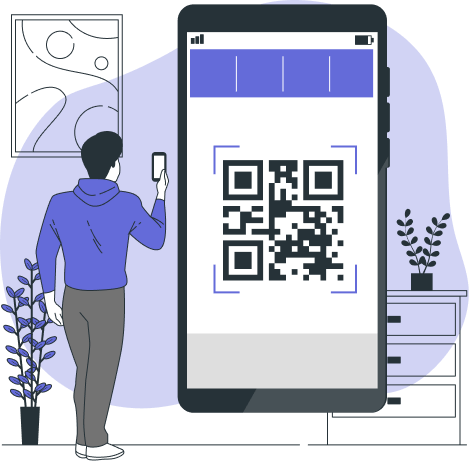
Most people only need a QR code once in a while — for a wedding invite, a shop poster, a resume, or a Wi-Fi password taped to the fridge. Paying for software or creating an account just for that one code doesn’t make sense. That’s the gap Uitly’s free QR code generator fills: open the page, type your link or text, and download a working code in a few seconds.
This guide walks through what the tool actually does, where it fits compared to other free generators, and the small details that decide whether a QR code scans cleanly or fails on the first try.
What the Uitly QR Code Generator Actually Does
At its core, the tool takes any piece of information — a website address, a paragraph of text, a phone number, or contact details — and converts it into a QR code image. There’s no account creation, no email verification, and no hidden paywall after the third or fourth code. You paste your content, the code appears, and you download it as an image.
The appeal isn’t that it does something no other tool can do. QR generation itself is a solved problem — plenty of sites offer it. The appeal is friction removal: fewer clicks between “I need a QR code” and “I have a QR code.” It’s the same practical, no-fuss approach we covered when looking at what’s actually changing in everyday tech tools this year — small utilities like this one rarely make headlines, but they’re the tools people end up using every week.
How to Create a Code, Step by Step
- Open the generator page. No login screen stands between you and the input box.
- Choose what the code should hold. A URL is the most common choice, but plain text, an email address, or a phone number works the same way.
- Paste or type the content. The tool builds the code as you type, so you can check it looks right before downloading.
- Scan it with your own phone first. This one step catches most mistakes — typos in a URL, a missing “https://”, or a phone number saved in the wrong format.
- Download the image and place it wherever it’s needed — a printed flyer, a slide deck, packaging, or a digital document.
That’s the whole process. There’s no design software involved and no waiting for a file to render on a server somewhere.
What Kind of Information Can Go Into a QR Code
A QR code isn’t limited to website links, even though that’s the most common use. Depending on the generator, a single code can store:
- A URL that opens a browser straight to a page
- Plain text, useful for instructions, a short message, or event details
- A phone number, so scanning starts a call
- An email address, which opens a pre-filled email draft
- Wi-Fi credentials, letting guests connect without typing a password
- Contact details (vCard), which save directly into a phone’s address book
Picking the right type matters more than people expect. A code meant to open a menu should hold a URL, not the entire menu typed out as text — long text blocks make the code denser and harder to scan from a distance.
Static vs. Dynamic Codes: The One Decision That Actually Matters
Free generators like Uitly typically produce static QR codes — the information is baked into the pattern itself and can’t be changed later. If the destination link needs to be updated after the code is printed, a static code won’t allow that; a new code has to replace it.
Dynamic codes solve this by pointing to a redirect link that can be updated behind the scenes, which is why marketing platforms that offer scan tracking usually charge for it. For a one-time use — a resume link, a personal portfolio, a fixed Wi-Fi network — static is not a downgrade; it’s simply the right tool for something that isn’t going to change. Dynamic codes earn their cost when a campaign link needs to move, or when someone wants to know how many people actually scanned it.
Where People Actually Use These Codes
| Situation | What the code holds | Why it helps |
| Business card | vCard or LinkedIn URL | Saves a contact without manual typing |
| Restaurant table | Menu page URL | Removes the need for printed menus |
| Product packaging | Instructions or warranty page | Keeps the box simple, details go online |
| Event signage | Registration or schedule link | One scan replaces a long web address |
| Home Wi-Fi | Network credentials | Guests connect without asking for the password |
| Resume or portfolio PDF | Direct link to the file | Recruiters reach the work sample instantly |
How Uitly Compares to Other Free Generators
Nearly every free QR tool online does the same basic job: text or link goes in, image comes out. The differences show up in the details:
- Signup requirements — some tools ask for an account after the first one or two codes; Uitly doesn’t gate the basic generator behind a login.
- Watermarks — a handful of “free” generators quietly stamp their own branding onto the downloaded image. Worth checking before printing anything in bulk.
- File format — PNG is fine for screens and most prints; SVG matters if the code will be scaled up for a banner or billboard, since it won’t blur.
- Customization — color changes and logo placement look nice, but every added design element increases the risk of a scan failure if not tested properly.
None of these differences make one tool dramatically “better” in a technical sense — QR generation is standardized. What changes is how much friction sits between opening the page and getting a usable file.
Tips for a QR Code That Actually Scans
A QR code that looks fine on a screen can still fail in print. A few things worth checking before publishing one anywhere:
- Test on more than one phone. Camera quality and lighting vary, and a code that scans instantly on one device might struggle on another.
- Keep enough contrast. Dark modules on a light background scan more reliably than color combinations that look stylish but reduce contrast.
- Don’t shrink it too much. A code printed smaller than roughly 2 cm across becomes unreliable to scan from any distance.
- Leave white space around the edges. Cropping too close to the code’s border can confuse a scanner.
- Avoid overloading it with text. The more data packed into a code, the denser and more error-prone the pattern becomes.
Frequently Asked Questions
Is the Uitly QR code generator really free to use? Yes — there’s no charge for generating a basic QR code, and no account is required to download it.
Can the QR code be edited after it’s downloaded? No. Once generated, the code is a fixed image. Any change to the destination link or text requires generating a new code.
Does it work for printed materials, or only digital use? Both. The downloaded image can be placed in a document, added to a design file, or printed directly, as long as the size and contrast are checked beforehand.
Why did my QR code fail to scan? The most common reasons are low contrast, a size that’s too small for the printed material, or a logo/design element covering too much of the pattern. Testing the code before final printing avoids this.
The Bottom Line
For a one-off QR code — a link on a flyer, a Wi-Fi password for guests, a quick way to share a portfolio — a free, no-signup tool like Uitly does exactly what’s needed without extra steps. The moment a project needs scan analytics or the ability to redirect an already-printed code to a new page, that’s the signal to move to a dynamic QR platform instead. For everything simpler than that, a static code generated in a few seconds is the more practical choice.