


By Magazine Media Staff (Lifestyle Desk)
You probably have creams, face wash, and sunscreen at home. That is a good start. But one of the easiest ways to get glowing skin is not in any of those bottles. It is plain water. The time you drink it matters more than most people think. This guide explains the best time to drink water for glowing skin in simple, easy steps.
Does Drinking Water Actually Help Your Skin?
Yes, it does. The reason is simple. Skin is one of the largest organs in the body. It needs adequate fluid to stay plump, elastic, and clear. When you are dehydrated, skin can look dull and tight and more prone to fine lines.
Water supports several processes that directly affect how your skin looks:
- It improves blood circulation. This helps deliver nutrients to skin cells.
- It supports collagen and elastin function. This keeps skin firm.
- It helps flush out waste products through the kidneys and digestive system.
- It reduces puffiness caused by water retention.
Hydration is not a replacement for a good skincare routine or sun protection. Think of it as the foundation that makes everything else work better. Knowing the best time to drink water for glowing skin simply makes that foundation stronger.
Read More: How Long Does It Take for Water to Clear Skin on the Face? Real Timeline
Why Timing Matters as Much as Total Intake
Most people focus only on how much water they drink each day. Total intake matters. Timing changes how effectively your body uses that water. Drinking two liters all at once in the evening does not deliver the same benefit as spreading that intake across the day.
Your skin cells rely on a steady supply of fluid, not an occasional flood. That is why understanding the best time to drink water for glowing skin can matter just as much as hitting a daily target number.
The Best Times to Drink Water for Glowing Skin
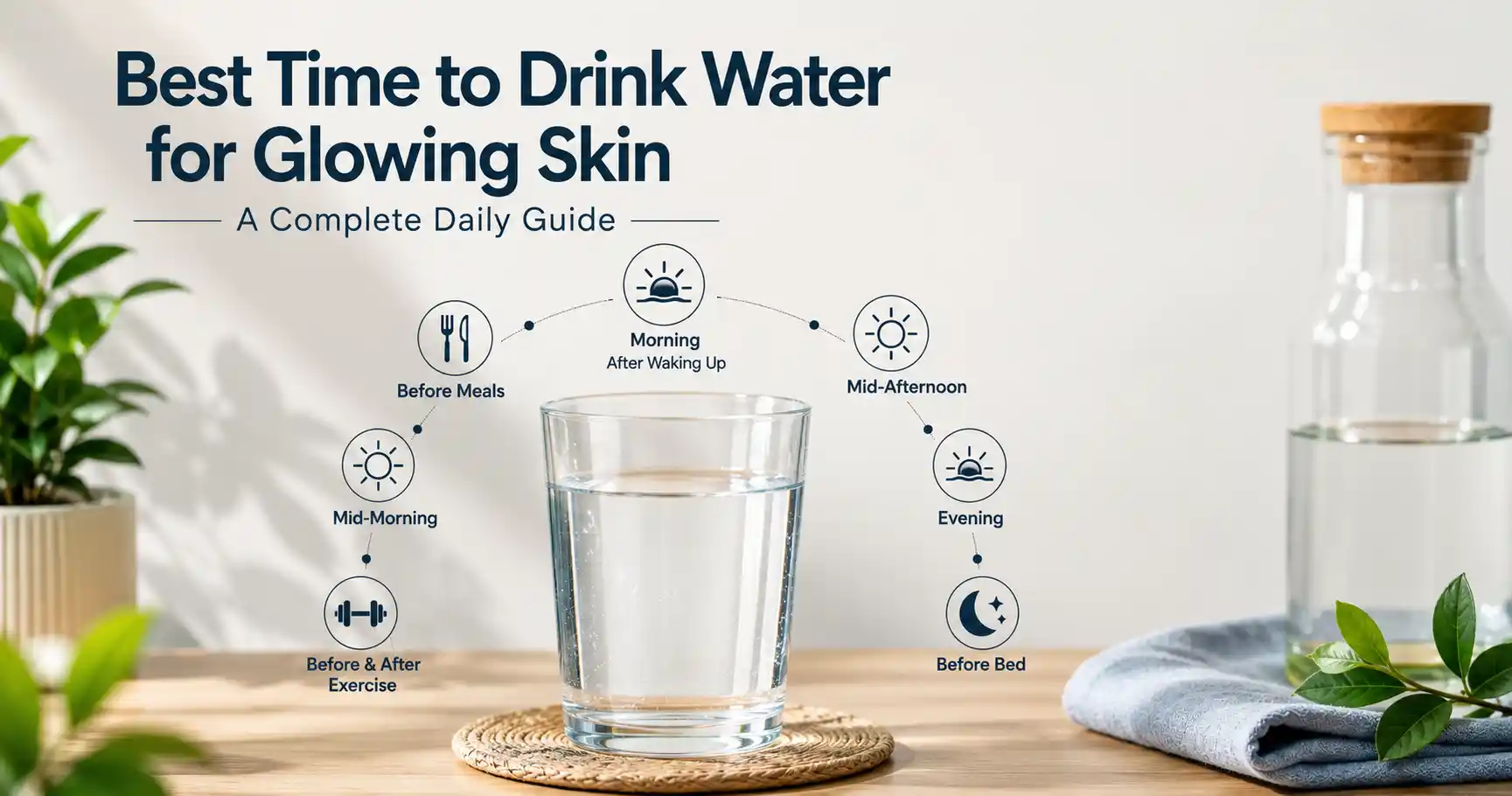
Here is a practical schedule built around how your body actually uses fluid throughout the day.
1. First Thing in the Morning
After six to eight hours of sleep without fluid intake, your body wakes up mildly dehydrated. A glass or two of water first thing in the morning rehydrates your system. Do this before anything else, including coffee.
This morning glass also supports digestion. It helps kickstart your metabolism for the day. Some people like adding a slice of lemon for extra vitamin C. The water itself is still doing most of the work.
For many people, this is the single best time to drink water for glowing skin, simply because it undoes an entire night of fluid loss in one simple step.
2. Before Meals
Drinking a glass of water about 20 to 30 minutes before eating supports digestion. It can also help prevent overeating. Filling part of your stomach with water before a meal is a simple, low-effort habit. It also keeps skin hydrated throughout the day.
This timing matters for skin indirectly. Better digestion means better nutrient absorption. Your skin depends on those nutrients just as much as the rest of your body does.
3. Between Meals
Sipping water between meals keeps hydration levels steady instead of spiking and dropping. Steady hydration is what actually shows up on your skin. It looks like a consistent glow rather than a temporary one.
This window is also useful if you eat a lot of fiber. Fiber absorbs water during digestion. It needs enough fluid on hand to work properly.
4. Mid-Afternoon
Most people hit an energy slump around 2 to 3 p.m. Many reach for coffee or a sugary snack at that point. A glass of water is often the better fix. Afternoon fatigue is frequently linked to mild dehydration rather than an actual need for caffeine or sugar.
Staying hydrated during this window also supports mood, focus and memory. All three tend to dip when fluid intake drops during a long day. This makes mid-afternoon one of the more overlooked answers to the best time to drink water for glowing skin, since most people reach for the wrong fix at exactly this point.
5. Before and After Exercise
Hydration around exercise should start well before you actually work out. Drink water a day or two ahead of intense activity. Add a cup around 30 minutes before moderate exercise to keep your system prepared.
After exercise, replace the fluid lost through sweat. This supports skin recovery. It also helps flush out waste products released during physical activity. Skipping this step is one of the more common reasons skin can look dull after a workout instead of glowing.
6. In the Evening, Before Bed
This window gets skipped over in most articles on this topic. It deserves real attention. While you sleep, your body repairs cells, regulates hormones like melatonin and cortisol, and renews skin tissue. All of that repair work depends on adequate hydration.
The benefits of an evening glass of water include:
- Supporting skin repair and regeneration overnight
- Helping maintain skin elasticity, which can reduce the look of fine lines over time
- Keeping the cardiovascular and digestive systems functioning smoothly through the night
The drawbacks are just as real. They are worth planning around:
- A large amount right before bed increases the risk of nocturia. That means waking up to use the bathroom.
- Chugging water too close to bedtime can overwhelm your kidneys. It can also disrupt electrolyte balance.
- Interrupted sleep from bathroom trips can undo any skin benefit gained from the water itself.
The fix is timing, not avoidance. Stop heavier water intake about one to two hours before bed. Keep your total evening amount to a small glass rather than a large bottle. This gives your body enough time to process the fluid before you lie down.
Warm or cold water before bed?
Both work fine. Warm water can aid digestion and feel calming before sleep. Cold water feels more refreshing for some people. Neither option is clearly better for skin. Personal comfort should guide the choice.
If you only remember one new tip from this guide, make it this one. The evening window is the most overlooked answer to the best time to drink water for glowing skin, mainly because most guides stop at exercise and never mention sleep at all.
How Much Water Should You Actually Drink Each Day?
Daily water needs vary by age, activity level and climate. Here is a general guideline.
| Age Group | Recommended Daily Water Intake |
|---|---|
| Toddlers (1 to 3 years) | About 4 cups (1 liter) |
| Kids (4 to 8 years) | 5 to 7 cups (1.2 to 1.6 liters) |
| Teen girls (9 to 18 years) | 7 to 9 cups (1.6 to 2.1 liters) |
| Teen boys (9 to 18 years) | 8 to 11 cups (1.9 to 2.6 liters) |
| Adult men (19+) | About 13 cups (3 liters) |
| Adult women (19+) | About 9 cups (2.2 liters); more if pregnant or breastfeeding |
| Adults 65 and older | 7 to 9 cups (1.6 to 2.1 liters) |
A few factors can shift these numbers. High activity levels, hot climates, certain medications like diuretics, and overall health conditions can all increase or decrease how much water your body actually needs. Knowing the best time to drink water for glowing skin only helps if the total daily amount is roughly in this range to begin with.
Does Water Temperature Change the Skin Benefits?
People often ask whether warm water works better than cold water for skin. The honest answer is that both hydrate you equally well. Warm water may feel gentler on the stomach first thing in the morning. Cold water can feel more energizing. Neither temperature changes how your skin absorbs or uses that hydration internally. Choose based on comfort rather than any skin-specific advantage.
Foods That Support Hydration Alongside Water
Water is not the only source of hydration. Certain foods carry a high water content and contribute to overall fluid intake throughout the day. Cucumbers, watermelon, oranges, strawberries, and leafy greens like lettuce and spinach all fall into this category.
Adding these foods to meals does not replace drinking water directly. It does support the same goal. Combined with a smart water schedule, hydrating foods make it easier to reach a daily fluid target without forcing down large amounts of plain water at once.
Common Mistakes People Make With Water Timing
A few habits quietly work against good hydration and undo the benefits of finding the best time to drink water for glowing skin, even when total water intake looks fine on paper.
Drinking most of your water in one sitting. Chugging a liter in the evening does not have the same effect as spreading that liter across the day. Your kidneys can only process so much fluid at once. The excess is simply flushed out rather than used.
Replacing water with other beverages. Coffee, tea and soda all contain water. Caffeine and sugar can work against steady hydration. Relying on these instead of plain water throughout the day makes it harder to stay consistently hydrated.
Ignoring thirst cues until they become strong. By the time you feel very thirsty, mild dehydration has often already set in. Sipping water on a schedule, rather than waiting for thirst, keeps hydration levels steadier and supports skin more consistently.
Forgetting the evening window entirely. As covered earlier, most guides to the best time to drink water for glowing skin stop at exercise and skip the hours before bed. That gap leaves out one of the more meaningful windows for overnight skin repair.
Does Water Quality Matter as Much as Timing?
Filtered, tap and bottled water all hydrate the body in essentially the same way. Mineral content varies slightly between sources. For most healthy people, the difference is not significant enough to change skin outcomes on its own. Timing and consistency matter far more than the specific source of the water itself.
If you have specific concerns about your local tap water quality, a simple home filter is a reasonable, low-cost option. It does not change the core advice in this guide about the best time to drink water for glowing skin.
Signs You Are Not Drinking Enough Water for Your Skin
Dehydration shows up on your skin before it shows up anywhere else. Watch for these signs:
- Dryness and flakiness
- A dull, tired-looking complexion
- More noticeable fine lines
- Increased oiliness, since skin can overcompensate for lost moisture
- Dark circles under the eyes
- Slower healing of blemishes or minor irritation
Beyond the skin itself, general dehydration warning signs include dark yellow urine, low blood pressure, dizziness and confusion. If you notice several of these at once, increasing your water intake should be a priority. It should not be an afterthought.
Building a Simple Daily Hydration Routine
Putting all of this together does not require a complicated schedule. A simple version looks like this:
- One to two glasses right after waking up, before coffee
- A glass 20 to 30 minutes before each meal
- Small, steady sips between meals rather than large gulps
- A glass during the mid-afternoon slump instead of a sugary snack
- Water before and after any exercise session
- One small glass in the early evening, stopping heavier intake one to two hours before bed
Following this rhythm consistently matters more than any single perfect moment. The best time to drink water for glowing skin is really a pattern spread across the whole day, not one magic hour.
Frequently Asked Questions
1. What is the best time to drink water for glowing skin?
There is no single best moment. Morning, before meals, mid-afternoon, and a small amount before bed each support skin hydration in different ways. Spreading intake evenly through the day works better than drinking a large amount at once.
2. Does drinking water really improve skin glow?
Yes. Proper hydration supports circulation. It helps flush waste products. It keeps skin cells plump. All of this contributes to a healthier-looking complexion over time.
3. Can drinking too much water before bed hurt my skin?
Indirectly, yes. Overhydration before bed can disrupt sleep through frequent bathroom trips. Poor sleep quality itself is linked to duller skin and slower overnight repair.
4. Does cold water work better than warm water for skin?
Neither is clearly superior for skin health. Both keep you hydrated equally well. Choose whichever temperature feels most comfortable for you.
5. How long does it take to see skin improvements from better hydration?
Most people notice less puffiness and a fresher look within a few days of consistent hydration. Deeper improvements in elasticity and fine lines take several weeks of consistent habits.
6. Does drinking water help with acne?
Water alone will not clear acne. Proper hydration supports better digestion and circulation. That can reduce some contributing factors to breakouts over time.
7. Is it bad to drink a lot of water right before bed?
It is not dangerous for most healthy people. It is not ideal either. The main downside is disrupted sleep from nighttime bathroom trips, which can outweigh any small hydration benefit.
8. How many glasses of water count as well-hydrated for skin?
Most healthy adults do well around 9 to 13 cups a day, depending on sex, activity level, and climate. Spreading that amount across the timings covered in this guide works better than drinking it all at once.
Conclusion
Glowing skin is rarely about one dramatic change. It comes from small, consistent habits. Hydration timing is one of the easiest to control. Start your day with water before coffee. Keep sipping steadily through meals and the afternoon slump. Wind down with a small glass in the evening rather than a large one right before bed. Pair that rhythm with a solid skincare routine and reasonable sun protection. The results tend to show up on their own. The best time to drink water for glowing skin, in the end, is simply all day, in small and steady amounts.
This article is intended for general wellness information and is not a substitute for personalized medical advice. Anyone with kidney conditions, heart conditions, or specific fluid restrictions prescribed by a doctor should follow their physician’s guidance over general hydration recommendations.