


By Magazine Media Staff (Lifestyle Desk)
Search any variation of a skin-whitening drink, and you will find bold promises. Some claim results in seven days. Others promise a permanent change to your skin from a homemade recipe. This article looks at what these claims actually mean. It covers what the evidence supports and what does not hold up.
What People Mean by “Skin Whitening Drinks”
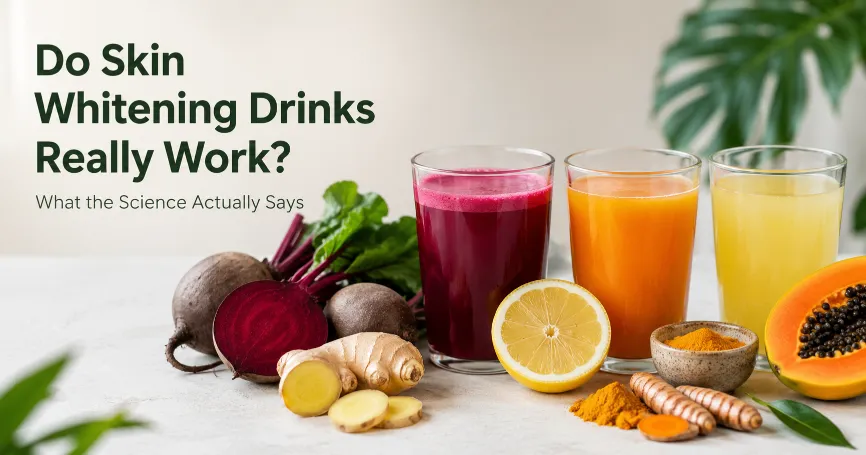
Most articles promoting a skin-whitening drink describe juices or beverages made from lemon, papaya, carrot, beetroot, turmeric, or coconut water. Some recipes add a glutathione supplement. The claim is usually that drinking these regularly lightens or evens out skin tone from the inside.
The ingredients themselves are often genuinely healthy. The specific whitening claims attached to them are where things get shaky.
Does Any Drink Permanently Whiten Skin?
No credible evidence supports the idea that any drink permanently changes your natural skin tone. Skin color is determined primarily by melanin production. That process is controlled by genetics, sun exposure and certain medical conditions. No beverage has been shown to permanently alter that underlying biology.
What these drinks can genuinely affect is how healthy and hydrated your skin looks. That is a different thing from actually changing your skin’s natural pigment. A dehydrated, dull complexion can look brighter once hydration improves. That is not the same as permanent whitening, even though marketing often blurs the two together.
Read More: Best Time to Drink Water for Glowing Skin: A Complete Daily Guide
Why the “7 Days” Claim Is Misleading
Claims promising visible whitening within seven days do not match how skin biology actually works. Skin cells go through a renewal cycle. It takes roughly 28 to 30 days for a new cell to reach the surface. This cycle can stretch even longer as people age.
No amount of any drink shortens that underlying cycle to a single week. Short-term claims like this are a common marketing pattern across wellness products. They do not reflect how skin actually changes over time.
What These Drinks Can Realistically Do
This does not mean these drinks are worthless. Many of the ingredients used in so-called whitening drinks have real, evidence-backed benefits. They are just not the benefits being marketed.
Hydration and plumpness. Water-rich ingredients like cucumber and coconut water support overall hydration. This can make skin look fuller and less dull.
Antioxidant support. Ingredients like carrots, berries, and green tea contain antioxidants. These may help protect skin cells from some environmental damage over time.
Vitamin C content. Citrus fruits and some vegetables provide vitamin C, which plays a real role in collagen production. Firmer skin can look healthier. This is not the same as changing skin tone.
Digestive and gut support. Some ingredients, like ginger and turmeric, may support digestion. Gut health has a documented connection to some skin conditions like acne.
These are legitimate, modest benefits. None of them amount to permanently lightening your natural skin color.
The Glutathione Question
Glutathione is frequently mentioned in skin whitening marketing. It plays a role in the body’s antioxidant processes. At very high, medically supervised doses, usually delivered through injections or IV treatments under a doctor’s care, it can influence melanin production. That is very different from an oral supplement added to a homemade drink.
Evidence for oral glutathione supplements producing meaningful, lasting skin lightening is weak and inconsistent. Unsupervised use of high-dose glutathione, particularly injectable forms sold without medical oversight, has been linked to safety concerns in some reported cases. Anyone considering glutathione for skin concerns should speak with a licensed dermatologist. Relying on an unregulated supplement or a homemade drink recipe is not a safe substitute for that conversation.
Common Ingredients and What They Actually Do
It helps to separate the real properties of common “whitening drink” ingredients from the claims attached to them.
Lemon. Contains vitamin C, which supports collagen production. It does not lighten skin tone when consumed as a drink. Applying it directly to skin can actually cause irritation or sun sensitivity instead.
Papaya. Contains vitamin C and enzymes that may support gentle exfoliation when applied topically. Drinking papaya juice does not have the same direct effect on skin pigmentation.
Carrot and beetroot. Rich in beta-carotene and antioxidants, which support general skin health. They do not alter melanin production in a way that changes your natural skin tone.
Turmeric. Contains curcumin, which has some anti-inflammatory properties. Claims about turmeric drinks “brightening” skin overstate what oral turmeric has actually been shown to do.
Coconut water. A genuinely good hydration source with natural electrolytes. It supports overall skin hydration rather than pigmentation change.
None of these ingredients are harmful in normal dietary amounts. Several offer real nutritional value. The issue is entirely with the whitening claims layered on top of them.
Real Ways to Address Uneven Skin Tone or Hyperpigmentation
If your actual goal is a more even skin tone rather than a marketing promise, evidence-based options exist. They tend to work far better than any drink.
Daily sunscreen. Sun exposure is one of the biggest drivers of uneven pigmentation and dark spots. Consistent SPF use is one of the most effective, well-supported steps you can take.
Topical vitamin C. Applied directly to skin, vitamin C serums have real evidence supporting a brighter, more even complexion over consistent use.
Retinoids. Prescription or over-the-counter retinoids support skin cell turnover. They can visibly improve tone and texture over several months.
Professional treatments. Options like chemical peels or laser treatments, performed by a licensed dermatologist, have documented evidence for treating specific pigmentation concerns.
Patience and consistency. Any of these approaches takes weeks to months to show results. They follow the same skin cell renewal cycle discussed earlier in this article.
A dermatologist can help identify whether uneven tone is related to sun damage, hormones, scarring or another cause. That distinction matters for choosing the right treatment.
Why Marketing Keeps Making These Claims
If whitening drinks do not deliver what they promise, it is worth understanding why the claims persist so consistently across wellness sites. A few patterns show up repeatedly.
Vague, unfalsifiable language. Phrases like “supports brightness” or “helps enhance radiance” sound like whitening claims without making a specific, testable promise. This lets sites avoid a direct false claim while still implying one.
Borrowed science. Real research on melanin, tyrosinase, or antioxidants gets cited to sound credible, even when the actual study involved a completely different method, such as a topical treatment or a medically supervised IV dose, rather than a homemade drink.
Selective anecdotes. A handful of testimonials get presented as proof, while normal skin changes from better hydration or diet get credited entirely to a “whitening” effect that was never actually measured.
Recognizing these patterns makes it easier to evaluate similar claims elsewhere, not just for this specific topic.
A Note on Skin Whitening Culture
It is worth acknowledging that a lot of skin-whitening marketing taps into pressure around lighter skin being seen as more desirable. This pattern is tied to colorism in many cultures. Setting that pressure aside, the honest, evidence-based goal for most people is healthy, even-toned skin rather than a fundamentally different skin color. That goal is achievable through the real methods covered above.
How to Read a Whitening Drink Claim Critically
The next time you come across a recipe or product promising whitening results, a few quick checks can help you evaluate it.
Look for specific numbers. Claims like “clears skin in 7 days” or “permanent results” should raise a flag immediately. Real biological processes, like skin cell turnover, do not move that fast, regardless of what you drink.
Check who is making the claim. A wellness blog selling a supplement has a financial incentive to describe strong results. A peer-reviewed study or a dermatology association generally does not have that same incentive.
Watch for borrowed scientific terms. Words like “tyrosinase,” “melanin pathways,” or “detoxification” sound credible. Using a real term does not automatically mean the underlying claim is accurate for the specific product being sold.
Consider the delivery method. A treatment that works as an injection under medical supervision does not automatically work the same way as a juice, powder or oral supplement. Delivery method changes how an ingredient reaches the part of the body it needs to affect. It also changes whether the ingredient reaches that target at all.
Applying these checks to any wellness claim, not just skin whitening drinks, tends to filter out a large share of exaggerated marketing.
What a Realistic Skin Routine Actually Looks Like
Instead of chasing a whitening drink, a realistic routine focused on skin health tends to produce better, more honest results over time.
A reasonable daily approach includes steady hydration throughout the day, a gentle cleanser used in the morning and night, a moisturizer suited to your skin type and daily sunscreen regardless of weather or season. Adding a vitamin C serum or a retinoid, based on your specific skin goals and tolerance, can further support tone and texture over several weeks to months.
This kind of routine will not turn your natural skin tone into a different color. It should not aim to. It will support healthier, more even-looking skin, which is what most people actually want when they search for a whitening drink in the first place.
Where These Recipes Usually Come From
Many “7 day” or “permanent” whitening drink recipes circulating online trace back to a similar pattern. A blog or wellness site publishes a recipe with a bold headline. Other sites copy the same recipe with slightly reworded claims. Over time, the repetition itself starts to feel like evidence, even though no new research or testing ever actually happened.
This is worth knowing because it explains why the same handful of ingredients, like lemon, papaya, and turmeric, show up across dozens of nearly identical articles with almost identical claims. Repetition is not verification. A claim appearing on fifty different websites does not make it fifty times more true than a claim appearing on one.
Frequently Asked Questions (FAQs)
1. Is there a skin whitening drink that works permanently?
No. No drink has credible evidence showing it permanently changes natural skin tone. Some ingredients support hydration and general skin health, which can make skin look brighter without actually altering pigmentation.
2. Can a homemade drink whiten skin in 7 days?
No. Skin cell turnover takes roughly 28 to 30 days at minimum. Claims of visible whitening within a week do not match how skin biology actually works.
3. Does lemon water lighten skin?
Drinking lemon water provides vitamin C, which supports collagen production. It does not lighten skin tone. Applying lemon directly to skin can also cause irritation.
4. Is glutathione safe for skin whitening?
Oral glutathione supplements have weak evidence for skin lightening. High-dose or injectable glutathione should only be used under medical supervision. Unsupervised use carries documented safety risks.
5. What actually helps with uneven skin tone?
Daily sunscreen, topical vitamin C, retinoids, and professional treatments from a dermatologist have the strongest evidence for improving skin tone and pigmentation concerns.
6. Are skin whitening drinks harmful?
The individual ingredients, like fruit juices or coconut water, are generally safe in normal amounts. The bigger concern is false expectations. In some cases, unsafe supplement use, like unregulated glutathione products, is a real safety issue too.
7. Can diet change your skin color permanently?
No. Diet can support overall skin health, hydration, and antioxidant levels. It does not change the underlying melanin production that determines your natural skin tone.
8. Why do so many sites promote skin whitening drinks if they do not work as described?
These claims generate significant search traffic and often use vague, unfalsifiable language that implies results without making a specific, testable promise. That makes the claims hard to directly disprove even though the evidence behind them is weak.
9. Is it better to focus on “glowing” skin instead of “whitening” skin?
For most people, yes. Glow, clarity, and even tone are achievable through hydration, sunscreen, and evidence-based skincare. Whitening implies changing your natural skin color, which is a different and largely unsupported goal.
Conclusion
Skin whitening drinks tap into a real desire for healthier, more even-looking skin. The specific whitening claims attached to them do not hold up against how skin biology actually works. Many of the ingredients used are genuinely healthy and support hydration or antioxidant intake. None of them permanently change your natural skin tone. No drink works in seven days. If your goal is a more even complexion, sunscreen, topical vitamin C, retinoids, and a dermatologist’s guidance offer real, evidence-based results.
This article is intended for general wellness information and is not a substitute for personalized medical advice. Anyone considering supplements like glutathione or dealing with persistent pigmentation concerns should consult a licensed dermatologist rather than relying on homemade drinks or unregulated products.